
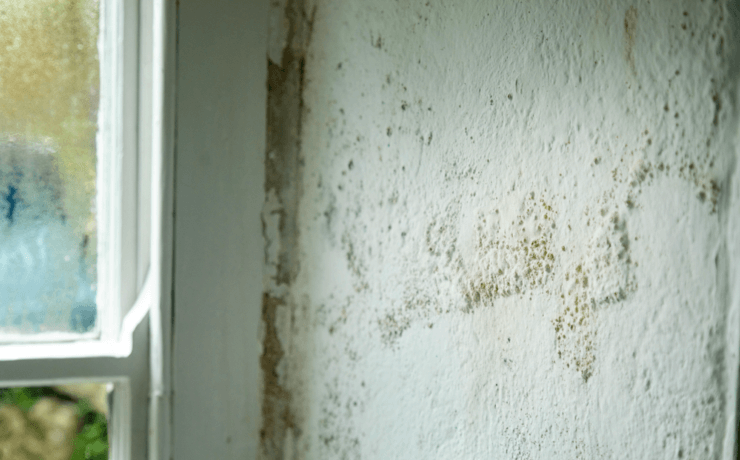
What makes old buildings different? From prehistory until the early 1900s, the vast majority of buildings in Cornwall were constructed with solid walls. These walls, typically built from locally sourced stone and clay, did not incorporate any air gap and functioned on different principles to the cavity walled or curtain walled structures which are the norm today.
Solid walled buildings, particularly those made from clay and stone, have a reputation for being cold and damp. This is primarily because the knowledge and skill required to maintain them was almost lost with the move towards concrete and cavity walled structures in the early to mid 20th century.
When a solid walled building is well maintained, the high thermal mass of the walls makes for a healthy comfortable living environment. However, when the walls become damp, they are much less thermally efficient and more likely to suffer from condensation.
Lime is the best way to cure damp, right?
Knowledge of the importance and use of lime mortars has seen a resurgence since the 1990s as the construction industry has become aware of the potentially damaging effects that cement mortar can have on old and listed buildings. Lime mortar is much softer and more vapour permeable than cement and is better suited to structures built of clay, stone, or soft brick.
Unfortunately, lime is often treated as a cure-all when it comes to old buildings. It is an important tool in combatting damp, condensation, and mould, but is not a panacea when it comes to curing damp.
If not with lime, how should I fix my damp problem?
Even if a solid walled structure has perfectly applied lime finishes, it will not necessarily remain dry. For it to do so, the moisture load (the quantity of moisture coming into contact with the walls) must be kept to a minimum and the airflow to the exterior and interior of the building must be adequate.
To reduce the moisture load, the rainwater goods (the gutters and downpipes) must be in good working order and correctly specified. The drainage at the base of the walls should be well designed, and the chimneys should be well detailed and regularly assessed and maintained. If a new lime finish (render, pointing, or plaster) is applied but the wall is still suffering from excessive moisture load, damp problems are likely to continue and over time the finish will deteriorate and eventually fail.

Find the Right Solution for Your Historic Building
Our four-step survey process begins with a no-obligation chat to see how we can best support your property and ensure you’re making the right choices.
What else should I consider to keep my old property dry?
Leaking gutters, chimneys, and poor drainage are the most common sources of damp issues in old Cornish buildings.
Well-functioning gutters keep runoff from the roof away from the walls and feet of a building. Gutters which are faulty can spill runoff down the walls and onto the ground. When this happens along the length of a gutter it promotes damp conditions inside the building, but if the gutter leaks heavily in one specific place and the runoff hits the building in a more concentrated stream, it can cause structural damage by washing away the mortar inside the wall or causing timber components to rot away.
Chimneys are often neglected and poorly maintained. They are hard to survey unless inspected with a drone or from a roofing ladder. They are exposed to the worst of the weather and elements of them fail unless maintenance is carried out every five to ten years. Once a failure occurs in a chimney a vicious circle of increasing moisture penetration and damage to the stack is initiated. The more moisture that gets in, the more the bricks and mortar of the stack degrade.
When buying an older property, as part of the pre purchase procedure, I recommend that the chimney stack is closely assessed and that any necessary remedial works are given a high priority.
The majority of solid walled structures, of which there are many in Cornwall, do not have a damp proof course or foundations comparable to those of modern buildings. This should not be an issue so long as the drainage at the base of the walls is adequate.
Stone walls have a clay or lime core. These materials readily take up and release moisture, so if a sufficient quantity of water comes into contact with the base of a wall it is able to move through it.
Simple things can make a lot of difference when it comes to drainage, such as making sure downpipes discharge into suitable points which take water away from the building or disconnecting leaking water butts.
I can’t afford to spend much, what should I do?
Look for small things that you can do to make a difference. Clear your gutters and make sure all the joins are watertight. If any downpipes are discharging close to the foot of the wall, use some old gutter to make a temporary gully to move the runoff away from the building.
Try to reduce any sources of moisture vapour within the building by opening windows in the kitchen when water is boiling or in the bathroom when the shower is on. Check the extractor fans in these areas are working and replace them if necessary.
Most importantly, seek advice to find the most cost effective way to fix the damp and write a budget to fund it.
Where should I look for advice?
Fixing a damp old building can seem like a daunting task. Getting expert advice to plan and prioritise remedial works will bring benefits that far outweigh the cost. The most expensive works are not always the most important ones; there are many small jobs that can be undertaken by the homeowner when they are equipped with the necessary knowledge.
We have provided a service of assessment and analysis of old buildings to many homeowners, and our testimonials show how well this has been received. When we assess a building, we inspect all areas of the building using a ladder and a drone before producing a report to help the homeowner understand their property and to prioritise remedial works. Call us today to discuss your project.
Need Expert Advice?
If you need expert advice on your building, our survey process is designed to be hassle-free. It all starts with a Free Introductory Call - a quick chat to discuss your property and see how we can help, with no initial obligation. Take the first step toward a drier, healthier home today.
Get Expert Advice