
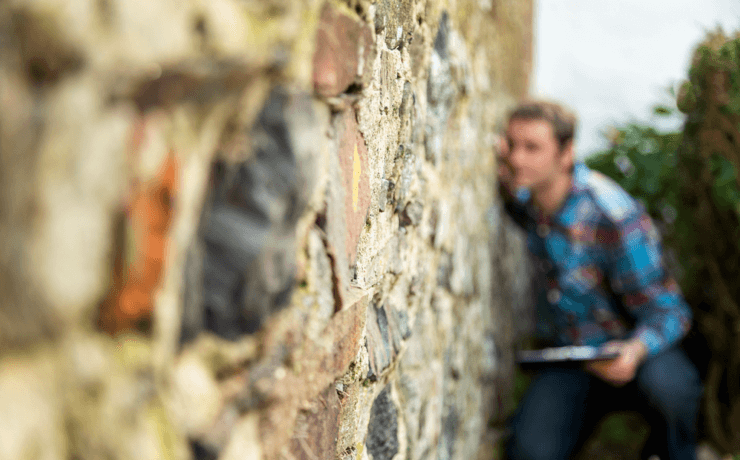
Cracked render is a common sight on older properties, often raising concerns about the building's condition. Render is a protective layer of mortar applied to walls to shield them from the elements. However, on older buildings (pre-1900), cracking and detachment of render are frequent occurrences. This can stem from various factors, including movement within the structure – older buildings naturally experience subtle movements due to factors like temperature fluctuations and ground settlement and through moisture ingress from sources like failing gutters or rising damp.
Limitations of Cement Render
Cement render is often unsuitable for older properties, particularly those built with cob or stone. Cement is hard and inflexible, unable to accommodate the subtle movements inherent in older structures. This can lead to cracking and eventual detachment. Furthermore, cement traps moisture within the walls, potentially leading to saturation and damage to the underlying substrate. This trapped moisture can weaken the structure and promote the growth of mould and damp.
Impact of Cracked Render on Older Buildings
Cracked render can have significant consequences for older buildings. Cracks allow moisture to penetrate, leading to further deterioration, especially in cob buildings, which are highly susceptible to moisture damage. Prolonged moisture exposure weakens cob, potentially leading to significant structural issues and costly repairs. Additionally, cracked render can detract from the appearance of the property.

Find the Right Solution for Your Historic Building
Our four-step survey process begins with a no-obligation chat to see how we can best support your property and ensure you’re making the right choices.
Advantages of Lime Render
Lime render is a more suitable option for older buildings due to its flexibility, which allows it to better accommodate the subtle movements of older structures, minimising the risk of cracking. Moreover, lime is breathable, allowing moisture to escape, reducing the chance of moisture build-up and damage to the underlying substrate. Lime is naturally compatible with traditional building materials like cob and stone.
Traditional Lime Rendering Techniques
Re-rendering with lime is a skilled process that requires expertise. It involves careful assessment and preparation of the wall surface, including addressing any underlying issues like structural movement or dampness. The application typically involves a series of coats (scat coat, base coats, top coat) for optimal strength and durability. Employing skilled lime masons with experience in traditional techniques is crucial for a successful outcome.
Best Practices for Long-Lasting Lime Render
For long-lasting lime render, thorough preparation and the use of high-quality materials are essential. Regular inspections and minor repairs can help to prevent further deterioration and ensure the long-term performance of the lime render.
Cracked render on older buildings is a concern that requires careful attention. Understanding the causes and choosing the right materials for repair, such as traditional lime render, is crucial for preserving the integrity and longevity of the property.
Need Expert Advice?
If you need expert advice on your building, our survey process is designed to be hassle-free. It all starts with a Free Introductory Call - a quick chat to discuss your property and see how we can help, with no initial obligation. Take the first step toward a drier, healthier home today.
Get Expert Advice