
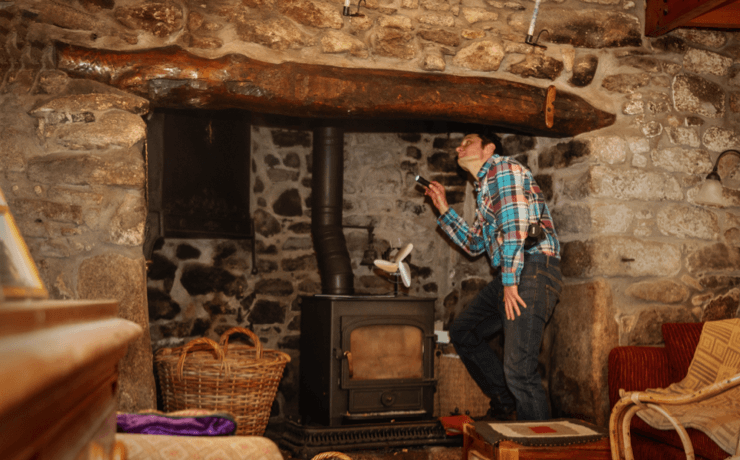
Chimneys on historic properties in Cornwall, often exposed to the harsh coastal weather, are notorious for causing damp and mould problems. This blog post explores the common issues, the importance of chimney surveys, and the best solutions for homeowners.
Why Chimneys Cause Problems
Constantly battered by rain, wind, and salt-laden air, chimneys on historic Cornish properties are particularly vulnerable to deterioration. This relentless exposure weakens the chimney structure, creating pathways for moisture to penetrate.
Furthermore, the hidden nature of chimney problems often delays their detection. Damage frequently goes unnoticed until significant symptoms appear, such as unsightly damp patches, the growth of mould, and the appearance of salt staining on the walls. By the time these issues become visible, the chimney may have suffered considerable damage, requiring costly and disruptive repairs.
Leaking chimneys not only impact the aesthetics and structural integrity of a property but also significantly diminish its value by causing the need for expensive remedial works. The presence of damp and mould can deter potential buyers and make it challenging to rent the property.
The Importance of Chimney Surveys
To prevent these issues from escalating and to ensure the long-term health of your property, a pre-purchase survey is highly recommended. This comprehensive inspection, often incorporating drone technology for a thorough assessment of the chimney's condition, allows for the early identification of potential problems.
Early detection enables homeowners to address issues proactively, avoiding costly emergency repairs and minimising disruption to their lives.

Find the Right Solution for Your Historic Building
Our four-step survey process begins with a no-obligation chat to see how we can best support your property and ensure you’re making the right choices.
Common Points of Failure
Several factors contribute to chimney deterioration. Damaged chimney pots and flaunching, responsible for directing rainwater away from the chimney, are common culprits. Cracks and deterioration within the mortar joints that hold the bricks together weaken the structure, allowing water to seep through.
Furthermore, the porosity of the bricks themselves can contribute to water ingress. Over time, the bricks may become saturated with moisture, leading to internal damage and accelerating the decay process.
Addressing the Problem
When faced with a leaking chimney, homeowners are often faced with a crucial decision: rebuild or patch? Rebuilding the entire chimney stack offers the most durable and long-term solution, providing lasting protection against future leaks. However, this option is typically the most expensive.
Patching the chimney, on the other hand, presents a more budget-friendly alternative. However, it's essential to acknowledge that patching may only offer a temporary solution. In many cases, patches can fail within a few years, requiring further repairs and potentially leading to more extensive damage in the long run.
Drone surveys play a vital role in guiding homeowners towards the most appropriate and cost-effective solution. By providing a detailed and comprehensive assessment of the chimney's condition, drone inspections enable surveyors to accurately assess the extent of the damage and recommend the most suitable course of action.
The Dangers of Rendering
While rendering may seem like a quick and cost-effective solution to address a leaking chimney, it's crucial to proceed with caution. Applying render to older, lime-mortared chimneys can have unintended consequences.
The hard, non-permeable nature of cement render can trap moisture within the chimney structure. This can exacerbate existing damp problems and further damage the historic fabric of the stack. Furthermore, movement within the stack often causes the render to crack and leak, especially when applied to older chimneys. These cracks can provide entry points for water, ultimately defeating the purpose of the rendering.
Therefore, it's crucial to consult with a building surveyor before proceeding with any rendering work. The surveyor can assess the chimney's condition and construction, determining whether rendering is a suitable and appropriate solution for your specific property.
The Importance of Lead Trays
A crucial element in preventing water ingress is the installation of a lead tray. This horizontal sheet of lead, positioned just above the ridge height, acts as a vital barrier within the chimney structure.
If any leaks occur above the lead tray, such as through cracked pots, flaunching mortar, or porous bricks, the lead tray intercepts the water and directs it safely away from the lower parts of the chimney through weep holes.
While all new chimneys should be constructed with lead trays, this crucial detail is often overlooked in older properties. If you are rebuilding an existing chimney, incorporating a lead tray is highly recommended to ensure long-term protection against water damage.
Taking Action
If you suspect a chimney problem or are experiencing symptoms such as damp, mould, or salt staining, it's crucial to take action. Contact a building surveyor in Cornwall like Muddy Mortars for a professional assessment.
A thorough inspection will help identify the root cause of the problem and recommend the most appropriate and cost-effective solutions. Early intervention can prevent further damage, protect the value of your property, and ensure a healthy and comfortable living environment.
Need Expert Advice?
If you need expert advice on your building, our survey process is designed to be hassle-free. It all starts with a Free Introductory Call - a quick chat to discuss your property and see how we can help, with no initial obligation. Take the first step toward a drier, healthier home today.
Get Expert Advice