
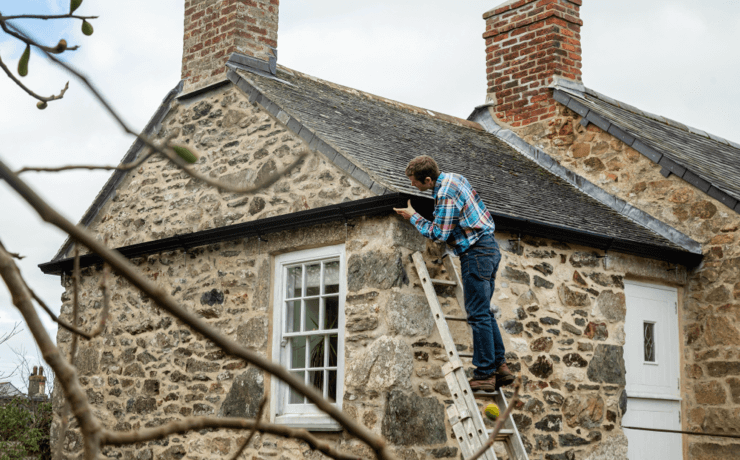
Owners of older buildings frequently find themselves in a difficult position. Contractors may recommend different approaches to the same damp problem, while online information and other sources often appear to offer conflicting advice. Faced with so many opinions, it can be difficult to know where to turn or how best to proceed.
This article explains why there is often so much confusion surrounding the repair of old buildings, and why obtaining an independent assessment before commissioning remedial work can help homeowners make better-informed and more cost-effective decisions.

Find the Right Solution for Your Historic Building
Our four-step survey process begins with a no-obligation chat to see how we can best support your property and ensure you’re making the right choices.
Why Separate Diagnosis From Repair?
Most people naturally think of diagnosis and repair as being part of the same process. A contractor visits the property, identifies the problem and recommends the work required. In many situations this approach works perfectly well. Old buildings, however, are often more complex.
Diagnosing a building and repairing a building are two different tasks. Diagnosis asks, "What is this building actually doing?" Repair asks, "What is the most appropriate way of addressing it?" Although these questions are closely related, they are not the same, and reaching the right diagnosis before deciding on remedial work often leads to better long-term outcomes.
Why Does Diagnosis Deserve Time?
In the UK there is a long-established culture of seeking advice from the tradesperson who will ultimately carry out the work. Most homeowners simply ask a tradesperson to visit the property and provide a quotation.
During what may only be a relatively short visit, the contractor is expected to understand the client's concerns, become familiar with an unfamiliar building, identify the likely causes of the problem, decide upon an appropriate remedial strategy and prepare a quotation. That's a lot to ask of anyone.
Even with the best will in the world, even the most experienced contractor is unlikely to be able to do all of this within the time available. This is not a criticism of contractors or their abilities, but simply a reflection of the economic realities of the building industry. Proper diagnosis takes time.
Why Does Independence Matter?
The value of an independent assessment lies in two things: time and perspective. By paying for the diagnosis itself, you are buying the time needed to investigate the building properly and the perspective that comes from considering the evidence before deciding upon a remedial strategy.
That time allows the assessor to collect and review the available evidence, analyse it in detail and think about the building as a system before reaching a conclusion. Alternative explanations can be considered and the various pieces of evidence weighed against one another before recommendations are made.
Independence also means that the diagnosis is not tied to any particular trade or remedial technique. Every experienced tradesperson brings valuable knowledge to a building, but an independent assessment allows the question "What is this building actually doing?" to be answered before deciding which repair is most appropriate.
How Does an Independent Assessment Improve Repair Decisions?
A thorough diagnosis does not necessarily result in more work being recommended. In many cases it leads to simpler, more focused and more cost-effective repairs. In others, it confirms that more substantial work is genuinely required. Either outcome is valuable, provided the recommendations are based upon a sound understanding of the building.
Diagnosis also helps establish the order in which work should be carried out. It is not uncommon for several defects to contribute to the same symptoms, yet not all of them require immediate attention. Understanding which issues are driving the problem, and which are simply contributing to it, allows repairs to be prioritised more effectively and budgets to be spent where they are likely to have the greatest benefit.
Perhaps most importantly, a good diagnosis helps avoid treating symptoms while overlooking their causes. Rather than becoming attached to a particular repair technique or material, the remedial strategy can be tailored to the specific needs of the building.
Final Thoughts
An independent assessment should not be viewed simply as a way of deciding what repairs need to be carried out today. It should also provide a better understanding of the building itself. That understanding helps homeowners make more informed decisions not only about remedial work, but also about its future maintenance and care.
Buildings continue to change throughout their lives. Defects develop, repairs are carried out and the way a building is occupied evolves over time. A good diagnosis provides a sound basis for responding to those changes. Once the building is properly understood, repairs can be planned more effectively, maintenance can become more proactive, and future decisions are generally made with greater confidence.
Need Expert Advice?
If you need expert advice on your building, our survey process is designed to be hassle-free. It all starts with a Free Introductory Call - a quick chat to discuss your property and see how we can help, with no initial obligation. Take the first step toward a drier, healthier home today.
Get Expert Advice